5 Principles to build a successful Team whilst aligning a Product to Customer Needs
When it comes to driving a multidisciplinary team towards a common goal, especially when innovating a product, the five following principles are my recipe for success.
- Know the team strengths and leverage them at maximum to drive the change and to foster alignment avoiding top-down communication — in my experience, the directive approach creates frustration in the long run, and the results, if any, are average.
- Diversity of backgrounds sparks brilliant ideas and creates the right environment to challenge without criticism.
- As Product Manager, you need to foster relationships in that diversity to create trust and velocity.
- Prepare: whether a meeting or the start of a whole new product, preparation is enabling success.
- Have fun (see the picture below) and stay with me until the end to understand how a mobile App and a donkey are related.
My recipe has multiple academic references. To know more: Tom & David Kelley, “Creative Confidence,” Chapter 6.
The right balance of taking ACTION and DESIGN
When we undertook the App mobile redesign, we immediately understood that to have meaningful data we had to design it from scratch. When redesigning a product you can:
- Gather data: the data showed up that our users were few very functional users, but we were not attracting new ones.
- Refer to overall company strategy: in our strategy, the app was a travel companion, and it had very limited capabilities to serve as a self-care tool.
- Defer to the Customer: we knew from the (many) comments that the customer was trying to use it as an alternative touchpoint to the call center.
We immediately (ACTION) embarked on a long journey of development and prototyping phases to achieve this.
The Problem…
Although a great milestone was achieved and the usage and feedback from our users were encouraging, I felt there was a disconnection in the team — one you might experience as well. The team was executing the product roadmap, but keeping the team focused on the value for the customer needed continuous alignment, and we were losing momentum in being fast and, consequently, testing and learning.
The Solution
It was time to involve the enlarged team — from UX to engineering — to own the product together with me. (Principle 2 in action)
I knew that I had great talents in the UX team, and I leveraged their skills to create a two-day design sprint in a quiet location. My plan was to create the right environment for the whole team to focus on the next steps in bringing the right product to our customers, meeting their needs. (Principle 1 in action)
The team produced three working prototypes, and three principles to follow to guide them in the next steps. During the workshop, we embraced an attitude to stop criticism and elaborate on each other’s ideas.
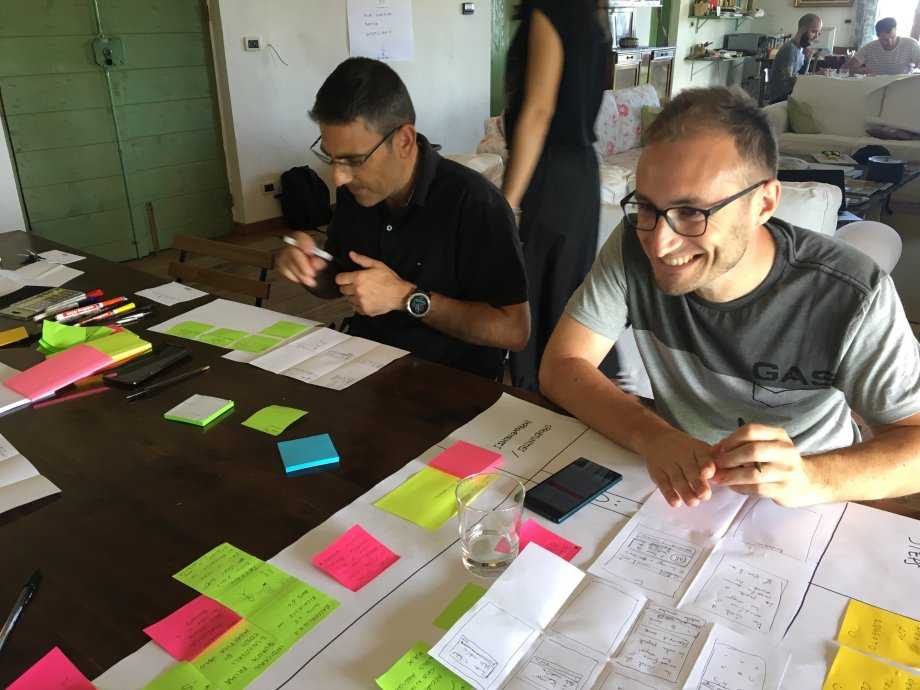
The team, mid-sprint, surrounded by sticky notes.
In the end, we took the time to celebrate both at the location, but more important, also presenting the results to stakeholders coming back to our day-to-day activities. (Principle 3 in action)
The key success factor was preparation (Principle 4 in action): from investigating the location to gathering the material, from organizing timing and slots to selecting the right team-building activities to complement the workshop. Every element was crucial to being successful in this activity.
We had a couple of great dinners outside on the porch at the location, and we visited the vineyard together. During the working session, a smile was always a priority for the success of the work together. (Principle 5 in action)
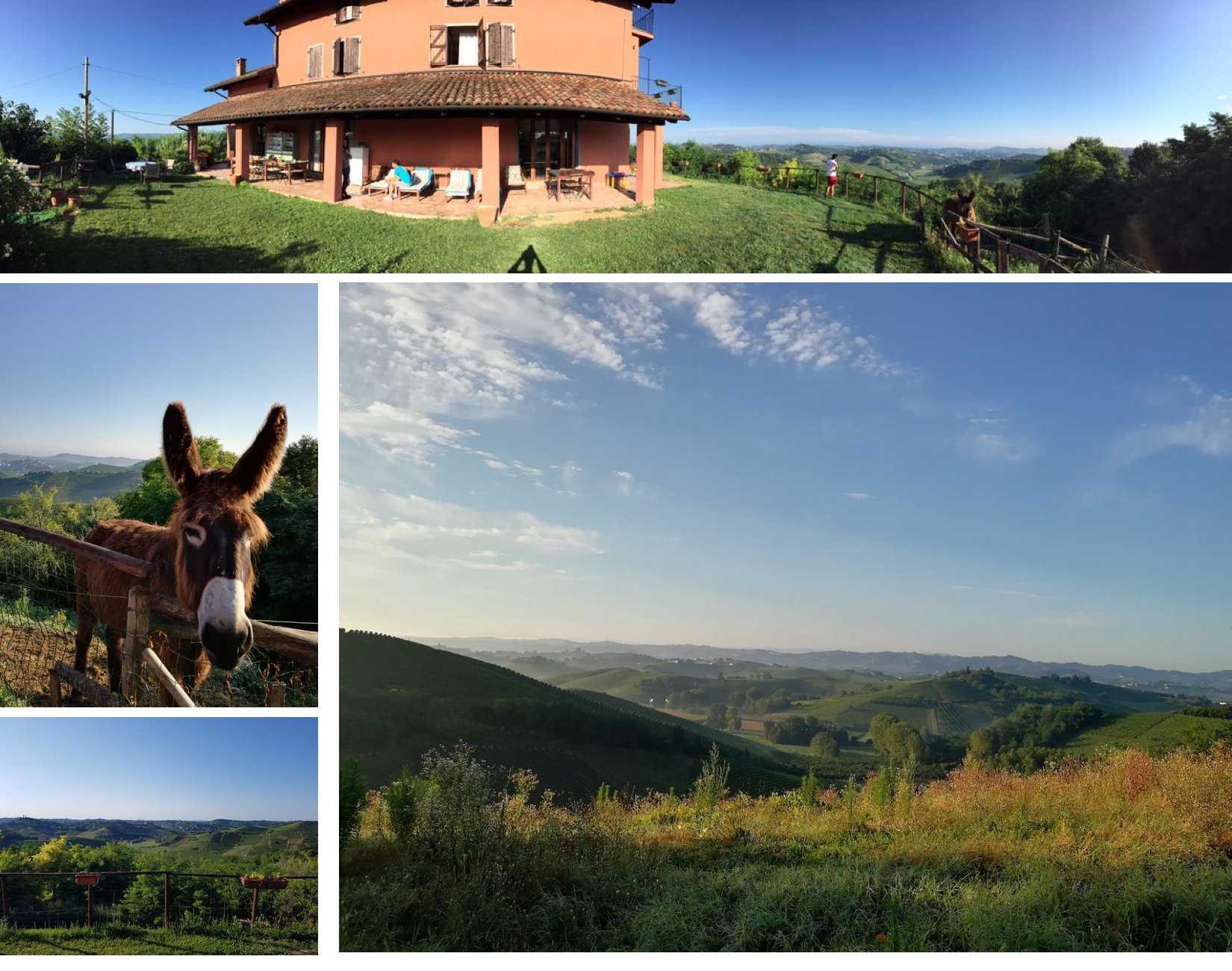
The location — and the donkey from the title, finally explained.
In conclusion, you might be wondering that the workshop was successful due to the amazing location, but I urge you to create the five-step “recipe” below with your team in your office right now: know your team, diversity, relationships, prepare, have fun! (now you know why the donkey is in the picture)
I’ll be reporting on other successful initiatives completely run at our premises, although it is undeniable that if you can afford a small offsite, you will burst the efficacy of the recipe above.